The Sky Between Walls: Urban Living at The Earthscape


There are mornings when the city feels like it’s pressing in – traffic rising like a tide, towers leaning closer, the air heavy with its own weight. But step inside The Earthscape, and the rhythm changes.
Here, walls don’t close in. They frame. They hold space for something larger than themselves: the sky.
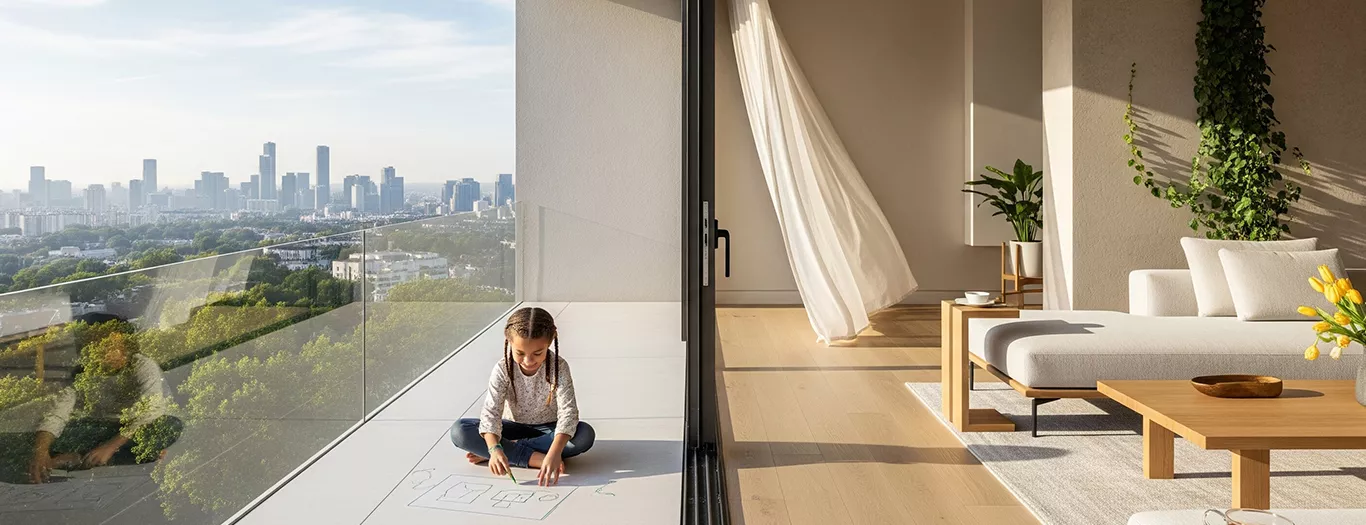
From a double‑height balcony, the city looks different. The horizon stretches wider, the air feels lighter, and the sky is no longer a distant backdrop – it becomes part of the home.
A child sits cross‑legged on the balcony floor, tracing shapes in the sunlight that spills across the tiles. Her laughter rises into openness, carried upward by the breeze that moves freely through the space.
In the living room, light doesn’t just enter – it performs. It shifts across the floor, climbs the walls, softens the edges of furniture. Morning light is sharp and golden; by evening, it turns liquid, painting everything in amber. Residents don’t need to step outside to feel the day change – they live inside its choreography.
Privacy, too, takes on a new meaning. Not the kind that isolates, but the kind that allows you to breathe without being watched. Balconies open to views of trees and sky, not into someone else’s window. Silence is no longer rare – it’s part of the architecture.
And in this space, life slows. A cup of tea lasts longer. Conversations stretch. Even solitude feels expansive, because it is shared with the sky.
The Earthscape isn’t just about homes with more square feet. It’s about the square feet you don’t see – the air, the light, the sky between walls. That invisible luxury that makes every day feel less like a routine, and more like a story unfolding.